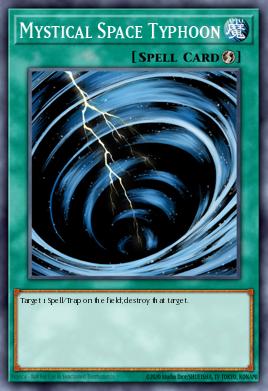
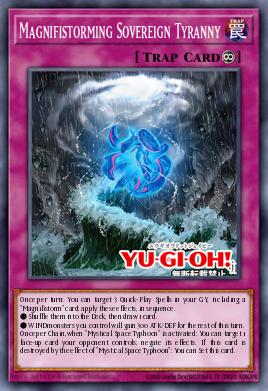
Radiant Typhoon: Eye of the Storm is a control-combo deck built around turning Mystical Space Typhoon from simple backrow removal into the heart of an entire engine.
Unlike traditional decks that only use MST reactively, Radiant Typhoon actively wants to resolve it, recycle it, and even destroy its own cards with it. Several Radiant Typhoon Spells can reset themselves after being destroyed by MST, allowing one activation to generate far more value than a normal 1-for-1 trade. The longer the duel lasts, the more oppressive the engine becomes as MSTs accumulate in the Graveyard and your monsters gain stronger effects.
Core Strategy
Your first objective is to establish access to Mystical Space Typhoon while developing your Radiant Typhoon monsters.
Swen and Krosea are your primary consistency pieces. Krosea helps assemble the engine immediately, while Swen becomes especially strong once MST reaches the Graveyard. From there, your Quick-Play Spells and monsters begin feeding into one another.
A typical opening sequence can look like:
Krosea → search your missing engine piece → establish a Radiant Typhoon Spell → get MST online → use MST to destroy your own Radiant Typhoon backrow → recover/reset that card while advancing your board.
The important concept is that your own Spell/Trap cards are valid MST targets.
If your opponent has no important backrow to destroy, MST is not dead. You can point it at your own Radiant Typhoon card and convert it into engine progression.
Meghala — Turning Every Storm Into Bodies
Once Meghala is established, activating MST or one of your Radiant Typhoon Quick-Play Spells can summon another Radiant Typhoon directly from the Deck.
That means a seemingly harmless Spell activation can suddenly produce another monster, another search, and potentially another Extra Deck summon.
For example:
Activate MST → trigger Meghala → summon Swen/Krosea → gain another search → convert the two monsters into Marine Eidolon.
You have now transformed one MST activation into removal, a monster from Deck, additional card advantage, and an Extra Deck play.
Marine Eidolon — Your Engine Loop
Radiant Typhoon Varuroon, the Marine Eidolon is one of your most important Extra Deck monsters.
Whenever possible, use spare Radiant Typhoon bodies to make Marine Eidolon and recover or access another MST.
This creates the deck’s central loop:
Radiant Typhoon monsters → Marine Eidolon → MST → Radiant Typhoon effects → more monsters → more Extra Deck pressure.
Do not rush through all three copies. In longer games, repeated Marine Eidolon summons are one of your best methods of maintaining resources.
Varuroon — Your Monster Control
Varuroon, the Vibrant Vortex becomes increasingly dangerous as MSTs enter your Graveyard.
With MST established, it provides monster-effect disruption. Once multiple MSTs are present, that disruption becomes substantially more punishing.
Because of this, dumping or using MST early is not wasteful. Even when the opponent has nothing particularly valuable to destroy, resolving MST can strengthen the rest of your board.
The deck rewards you for turning the Graveyard into a collection of spent storms.
Mandate — Making MST “Negate”
Radiant Typhoon Mandate creates one of the deck’s nastiest interactions.
When MST is activated, Mandate can interfere with another face-up opposing card.
That means one MST activation can potentially handle two separate threats.
For example, your opponent activates an important monster effect while controlling a Set Spell/Trap:
Activate MST targeting their backrow → trigger Mandate targeting their monster → negate the monster while MST destroys the backrow.
Against the right board, one Mystical Space Typhoon effectively dismantles two pieces of interaction.
You can also target your own Radiant Typhoon backrow with MST while Mandate disrupts the opponent, giving you disruption and engine value simultaneously.
Playing Into Established Boards
Going second, do not immediately fire every piece of interaction you have.
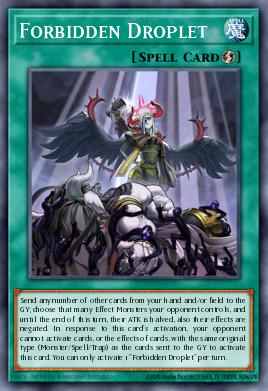
Your Droplet/Crown package should be used to force or disable the opponent’s most dangerous interruptions before committing important Radiant Typhoon starters.
The ideal sequence is often:
Force one negate → disable another threat → begin the Radiant Typhoon engine → use MST once the opponent has already committed additional backrow.
Because the deck generates value from MST regardless of which side of the field you target, opponents cannot safely play around it simply by refusing to Set cards.
Going First
Going first, prioritize establishing:
- Access to MST
- At least one meaningful Radiant Typhoon interruption
- Follow-up resources
- A way to continue summoning during the opponent’s turn
Do not treat the deck like an all-in combo strategy.
You usually do not need to empty your hand into the board. Radiant Typhoon is strongest when you finish your turn with interaction available and enough resources remaining to rebuild after the opponent attempts to break your field.
Going Second
Going second is where the deck’s flexibility becomes extremely noticeable.
MST clears conventional backrow while your non-engine cards attack monster-heavy boards. Once the opponent has spent their strongest interruptions, your Radiant Typhoon engine can begin generating bodies and searches.
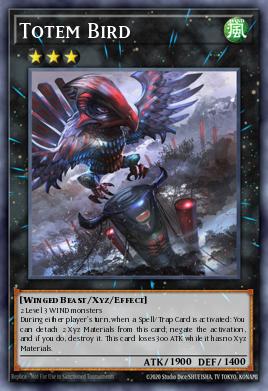
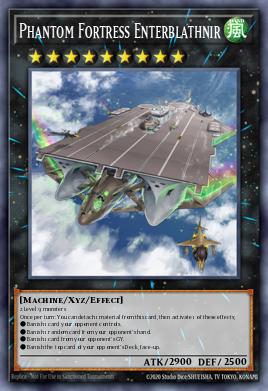
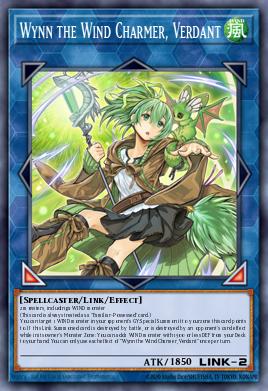
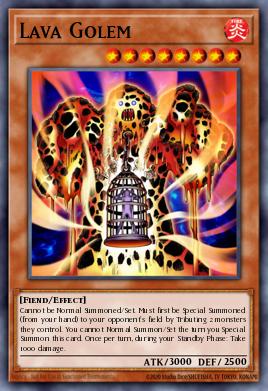
Lava Golem from the Side Deck gives you an especially brutal way to dismantle monster-heavy boards without needing to interact with every negate individually.
Against decks relying heavily on Spell/Trap interruption, your three copies of MST naturally become much more threatening.
Side Deck Philosophy
The Side Deck changes depending on whether the matchup demands more monster disruption, board-breaking power, or additional grind.
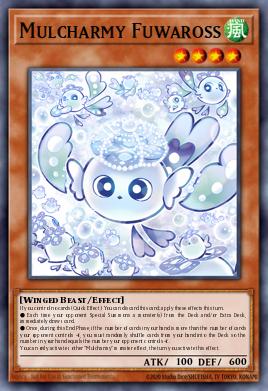
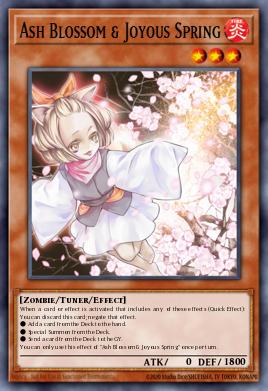
Ash Blossom and Mulcharmy Fuwalos increase your ability to slow high-output combo decks.
Lava Golem attacks boards that create multiple difficult-to-answer monsters.
Pot of Sloth provides another specialized option when slowing the opponent matters more than maximizing your own immediate ceiling.
The additional Meghala can also be brought in when you want maximum access to your core Radiant Typhoon engine rather than additional generic interaction.
Key Principle
Do not think of Mystical Space Typhoon as:
“Destroy 1 Spell/Trap.”
In this deck, think of it as:
Removal + trigger + extender + Graveyard setup + interruption enabler.
Sometimes the correct MST target is the opponent’s strongest backrow.
Sometimes the correct target is your own Set Radiant Typhoon Spell.
Sometimes merely putting another MST into the Graveyard is worth doing because it upgrades your monsters for the rest of the duel.
Knowing when to destroy your opponent’s cards and when to destroy your own is what separates basic Radiant Typhoon play from mastering the deck.
Radiant Typhoon: Eye of the Storm wins by making every MST activation feel unfair. The opponent sees an old-school backrow removal Spell.
You see the beginning of another storm.

 60
60 300
300 630
630 660
660














 Cool
0
Cool
0
 Funny
0
Funny
0
 Angry
0
Angry
0
 Sad
0
Sad
0