Memento Mori
 90
90 150
150 420
420 930
930Deck Primer
Memento Mori
Deck Description
Memento Mori is a high-ceiling Fusion combo/midrange deck built around deliberately destroying its own monsters, loading the Graveyard with specific resources, and recycling those resources into increasingly powerful plays. Where most strategies gradually run out of monsters after trading with an opponent, Memento is designed to make those exchanges profitable.
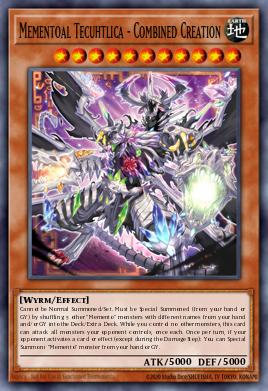
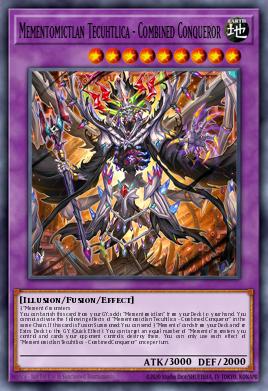
The centerpiece of the modern strategy is Mementomictlan Tecuhtlica - Creation King. Summoning Creation King doesn’t merely establish a boss monster—it sends three Memento cards from the Deck and/or Extra Deck to the Graveyard, dramatically accelerating the engine while establishing a Quick Effect capable of destroying your own Memento monsters alongside opposing cards.
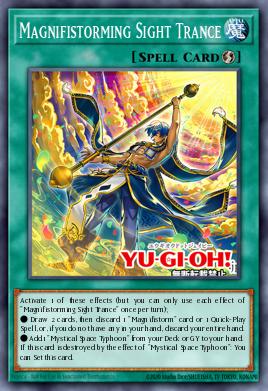
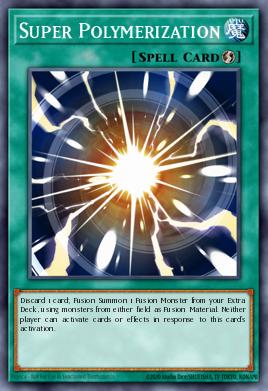
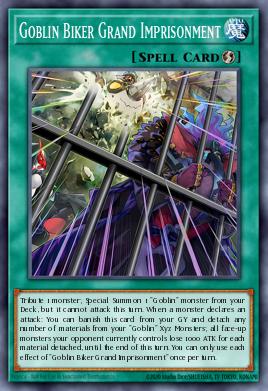
The deck supplements that engine with Radiant Typhoon Vision for hand sculpting and Graveyard setup, Goblin Biker Grand Breakout as additional access to Mementotlan Goblin, The Fallen & The Virtuous as Quick-Play removal, and a large Super Polymerization package that allows opposing monsters to become your Fusion Materials.
The result is a deck with three distinct strengths:
Explosive setup. One successful starter can rapidly turn into a developed Graveyard and Creation King.
Board-breaking. Droplet, Super Polymerization, Fallen & Virtuous, and the Fusion toolbox allow the deck to attack established fields without relying exclusively on hand traps.
Recovery. If the opponent survives the initial exchange, the Memento cards already placed in the Graveyard frequently become the resources used to build the next field.
The challenge is sequencing. Memento Mori isn’t a deck where memorizing one fifteen-step combo is enough. You need to understand what each Memento puts into the engine and choose your sends, searches, destruction targets, and Fusion Monsters according to the hand and matchup.
1. Know Your Engine
Before memorizing combos, understand what you’re trying to access.
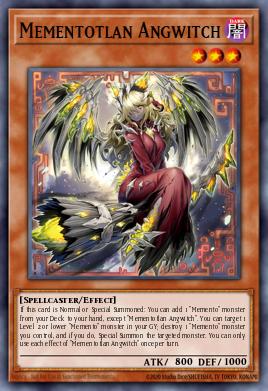
Mementotlan Angwitch — Your Primary Searcher
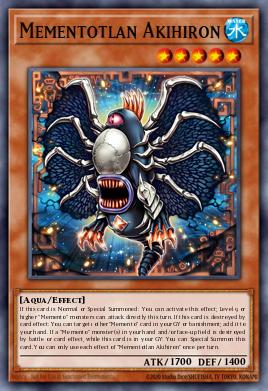
Angwitch is normally one of your best opening Normal Summons because her summon gives you access to another Memento monster.
Your search depends on what the hand is missing.
If you don’t have access to Tatsunootoshigo, that’s frequently your search.
If Tatsunootoshigo is already available, don’t automatically search another copy. Use Angwitch to find whichever Memento name your developing Graveyard actually needs.
Angwitch also has another important role once monsters begin being destroyed: she can destroy a Memento you control and revive another Memento from the Graveyard.
That means Angwitch changes roles during the combo:
Early: search.
Later: convert one established resource into another body from the GY.
2. Tatsunootoshigo Is Your Graveyard Accelerator
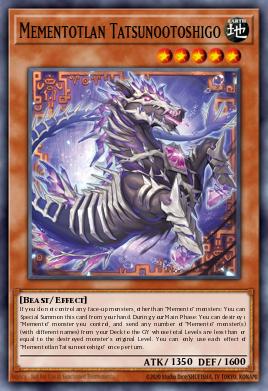
Mementotlan Tatsunootoshigo is one of the cards you most want to access early.
If you control a Memento monster, Tatsunootoshigo can Special Summon itself from the hand.
Then, while you don’t control a non-Memento monster, it can destroy itself and send Memento monsters with different names from your Deck to the Graveyard whose combined Levels are 6 or less.
That last sentence is extremely important.
You’re not blindly milling cards.
You’re selecting the contents of your Graveyard.
For example, depending on what your hand and GY already contain, Tatsunootoshigo can load multiple smaller Memento names that provide the exact resources required for the next section of your combo.
So:
Angwitch → Tatsunootoshigo
is powerful because Angwitch provides access to the monster that subsequently converts itself into multiple specifically chosen GY resources.
3. Your Basic Angwitch Opening
Suppose your opening hand contains:
Angwitch + four unrelated cards
and no Tatsunootoshigo.
Start with:
Normal Summon Angwitch.
Activate Angwitch and search:
Mementotlan Tatsunootoshigo.
Because you control Angwitch—a Memento monster—you can now:
Special Summon Tatsunootoshigo.
You have now transformed one Normal Summon into:
Angwitch on field + Tatsunootoshigo on field + access to Tatsunootoshigo’s Deck-to-GY setup.
This is where you stop following a rigid flowchart and inspect the rest of your hand.
Ask:
What Memento names do I already have?
Which names do I need in the GY?
Do I already have Fusion?
Do I have Bone Party?
Do I need Goblin access?
Your Tatsunootoshigo sends should answer those questions.
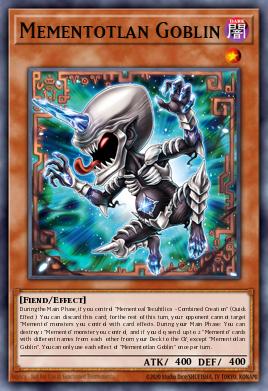
4. Mementotlan Goblin Is One of Your Best Setup Tools
Goblin is deceptively important.
It can destroy a Memento monster you control and send two Memento cards with different names from your Deck to the GY.
That is an enormous amount of targeted setup.
The key is choosing the destruction target intelligently.
Don’t think:
“Which monster can I afford to lose?”
Think:
“Which monster actually benefits me by being destroyed?”
If the monster has already performed its important field effect, destroying it is much less expensive.
You then gain two specifically selected Memento cards in the GY.
That means Goblin frequently represents:
one destruction trigger + two precise GY resources.
5. Why Goblin Biker Grand Breakout Is Here
This is one of the stranger-looking cards in Memento Mori until you understand the interaction.
Mementotlan Goblin is a Goblin monster.
Grand Breakout lets you Tribute a monster to Special Summon a Goblin from your Deck.
So imagine you’ve already used the important effect of one of your monsters.
Instead of leaving that spent body sitting on the field:
Grand Breakout → Tribute the expendable body → Special Summon Mementotlan Goblin from Deck.
Now Goblin provides its own Memento setup.
You’ve effectively converted a monster that had already done its job into direct access to another engine piece.
This is also why you shouldn’t immediately Link away every spare monster.
A body that appears useless may actually be the Tribute that turns Grand Breakout into Goblin access.
6. Bone Party Is More Than an Extender
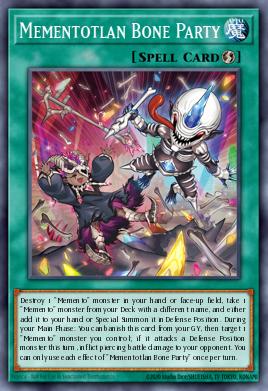
Mementotlan Bone Party is one of the deck’s strongest cards because it simultaneously interacts with Memento’s destruction mechanic and accesses monsters directly from the Deck.
When using Bone Party, choose your destruction target based on whether that monster has already provided its value.
Example
You summon Angwitch and resolve her search.
Angwitch has now performed her primary opening job.
If Bone Party can convert that Angwitch into the exact Memento monster needed to continue your sequence, destroying Angwitch isn’t simply:
-1 Angwitch.
It’s:
Angwitch searched a monster → Angwitch becomes the destruction resource → Bone Party produces another engine monster → Angwitch is now available as a GY resource.
That’s how you need to evaluate Memento cards.
One monster can provide value in several different zones during the same turn.
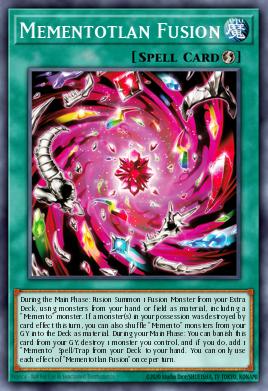
7. Mementotlan Fusion Is an Engine Card, Not Just Polymerization
Do not treat Mementotlan Fusion like an ordinary Fusion Spell.
Its job isn’t merely:
two monsters → one Fusion Monster.
Once you’ve destroyed a monster that turn, Mementotlan Fusion can recycle appropriate Memento resources from the Graveyard during the Fusion process.
That means the cards you’ve deliberately loaded through Tatsunootoshigo and Goblin aren’t dead.
They’re Fusion material.
And Fusion itself can subsequently become another engine piece through its Graveyard effect.
From the GY, Mementotlan Fusion can destroy a Memento monster you control to search a Memento Spell/Trap.
So a common resource pattern is:
Load Mementos into GY
→ Fusion Summon using those resources
→ Fusion enters GY later
→ destroy another Memento
→ search another Memento Spell/Trap.
One card participates in several stages of your resource loop.
8. Creation King — What You’re Actually Trying to Reach
Mementomictlan Tecuhtlica - Creation King is the centerpiece of the modern deck.
When Fusion Summoned, Creation King sends three Memento cards from your Deck and/or Extra Deck to the GY.
That’s not just bonus advantage.
That’s effectively:
“Build the Graveyard you want.”
Example
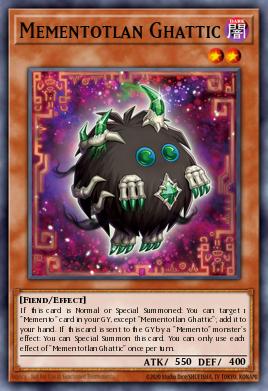
Suppose you’ve reached Creation King but your earlier combo already put Goblin and Ghattic into the GY.
Don’t automatically send those names again because you memorized them from a combo guide.
Look at what’s missing.
If your GY lacks a particular monster needed for revival, send it.
If you need another Memento Spell/Trap accessible through your engine, set that up.
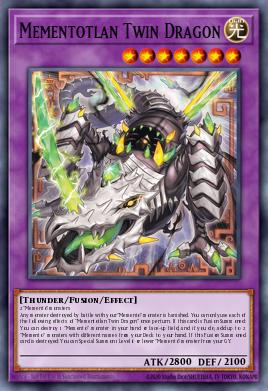
If Mementotlan Twin Dragon is useful from the Extra Deck/GY in the current line, Creation King can even contribute to that setup because its sends aren’t restricted solely to the Main Deck.
The three sends should make the rest of your field better, not merely make your Graveyard larger.
9. Using Creation King’s Interaction Correctly
Creation King also provides your major interactive threat.
Its Quick Effect allows you to target Memento monsters you control and opposing cards in equal numbers and destroy them.
This produces one of the central tactical ideas of the deck:
Your own monsters are ammunition.
Example
You end with Creation King plus another Memento monster whose important effect has already resolved.
The opponent summons a crucial starter.
Don’t necessarily destroy it immediately.
Suppose they then activate an extender and commit another important card.
Creation King can convert your expendable Memento resources into removal of their developed position.
Instead of:
your two monsters versus their two cards
becoming a symmetrical trade, your destroyed Mementos can continue generating GY value afterward.
Their destroyed cards usually don’t.
That’s how Memento wins resource exchanges.
10. Don’t Fire Creation King at the First Thing You See
This is one of the easiest ways to waste your end board.
Imagine the opponent Normal Summons something.
You immediately destroy it.
They shrug and Special Summon their real starter.
Now Creation King’s interaction has already been spent.
Instead, ask:
Does this card actually threaten my board?
Is this the choke point?
Can I allow another summon so Creation King removes multiple important cards simultaneously?
Creation King becomes significantly stronger when you understand the opponent’s archetype.
The better you know their combo, the better your Memento board becomes.
11. Radiant Typhoon Vision — Fix the Hand Before Committing
Vision is particularly useful because Memento cares about where its resources are located.
A card that isn’t useful in your current hand may be much more useful once placed into the Graveyard or exchanged for another draw.
Example
Suppose your hand contains:
Angwitch + a Memento monster you’d rather access from the GY + Vision + interaction.
You already possess a clean starter.
That means the awkward Memento isn’t necessarily something you need to preserve in hand.
Vision can help turn unwanted resources into new cards while improving the quality of your overall hand.
Conversely, if your hand already contains excellent engine access but lacks a way to fight through interaction, Vision can be used to dig for the cards that help force your engine through.
The question isn’t:
“Can I activate Vision?”
It’s:
“Which card in this hand becomes more valuable somewhere other than my hand?”
12. Super Polymerization — Check Before You Destroy Anything
Before using Droplet, Fallen & Virtuous, Creation King, or another removal effect, inspect the opponent’s monsters for Super Polymerization combinations.
This deck dedicates substantial Extra Deck space to Super Poly specifically because it can convert opposing monsters into your own threats.
Example: Spellcaster + non-Spellcaster
If the opponent establishes the appropriate combination, Mixousia the Confounder becomes an available Fusion destination.
Instead of spending removal separately on both monsters:
Super Polymerization → consume both monsters → summon Mixousia.
You’ve removed their resources while developing your own field.
Fusion-heavy board
If the opponent establishes multiple Fusion Monsters with different Attributes, inspect whether Hyperinvoked Aeon is available.
Against the correct board, this can turn Super Polymerization from ordinary removal into a devastating swing.
This is why Super Poly should often be held until the opponent commits enough material.
Removing their first legal monster combination may be good.
Removing the important combination after they’ve invested several additional resources can win the Duel immediately.
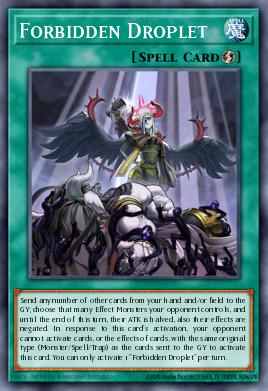
13. Forbidden Droplet Sequencing
Droplet isn’t simply there to negate monsters.
The cost can actually help organize your resources.
Example
Suppose you’re going second and hold:
Angwitch + Memento resource + Droplet + Bone Party + another card.
The opponent has a monster negate threatening Angwitch.
Instead of:
Normal Angwitch → activate Angwitch → opponent negates it
you can use Droplet to disable the threatening monster first while sending a card that is useful from the GY.
Then:
Normal Angwitch → search → continue the engine.
You’ve simultaneously:
neutralized interaction
and
advanced your Graveyard.
That’s considerably better than treating Droplet’s send as a painful discard.
14. The Fallen & The Virtuous — Remove the Choke Point
Fallen & Virtuous gives this build another way to interact without committing the Memento engine first.
Its Extra Deck package exists specifically so the card can generate removal while setting up its associated Fusion resources.
Going-second example
Opponent establishes three cards:
one monster negate + one extender/resource monster + one relatively irrelevant body.
Don’t remove the irrelevant monster just because it’s an available target.
Remove the card that prevents Angwitch/Tatsunootoshigo/Bone Party from resolving.
Then begin your Memento sequence.
Board breakers aren’t trying to make the opponent’s field completely empty.
They’re trying to create a safe opening for your engine.
15. Playing Through Ash Blossom
Suppose:
Normal Angwitch → activate Angwitch.
Opponent activates Ash.
Your turn isn’t automatically dead.
Look for independent access through:
Bone Party
Tatsunootoshigo already in hand
Grand Breakout into Goblin
or another available Memento route.
This is why you don’t dump every extender before testing the opponent’s interaction.
Angwitch can become bait.
If they Ash Angwitch and you already possess Tatsunootoshigo, they’ve potentially spent Ash stopping a search for something you already have.
That’s a favorable exchange.
16. Playing Through Infinite Impermanence
Suppose the opponent Imperms an important monster.
Before abandoning the line, ask whether that monster’s body still has value.
Can Bone Party destroy it?
Can Grand Breakout Tribute it?
Can it become Fusion Material?
Can another Memento effect destroy it to generate value?
A negated monster in Memento isn’t necessarily useless.
Sometimes your opponent effectively tells you:
“This monster no longer has a field effect.”
And your answer is:
“Fine. I’ll turn it into something else.”
That’s one of the deck’s strongest properties against targeted negation.
17. Going First — What a Good End Position Actually Looks Like
Don’t obsess over ending with six monsters.
A much healthier Memento position is something like:
Creation King established
plus
one or more expendable Memento resources
plus
a carefully prepared Graveyard
plus
one or two pieces of interaction remaining in hand.
Why?
Because Creation King turns your expendable Mementos into removal.
Your Graveyard contains follow-up.
Your hand still interacts independently.
And if the opponent clears the field, you haven’t necessarily lost your entire engine.
That’s far stronger than dumping every playable card onto the board.
18. Going Second — Example Decision Process
Suppose your hand is roughly:
Angwitch
Bone Party
Forbidden Droplet
Super Polymerization
another Memento card
and your opponent has an established board.
Do not automatically Normal Summon Angwitch.
First inspect the board.
Question 1
Can Super Polymerization consume two important monsters?
If yes, consider allowing those monsters to remain until you can extract maximum value from Super Poly.
Question 2
Which monster actually stops Angwitch/Bone Party?
That’s the priority Droplet target.
Question 3
Can Droplet send your spare Memento card to the GY profitably?
If yes, your board breaker simultaneously begins your setup.
Then:
break the critical interaction → Normal Angwitch → search → establish Tatsunootoshigo/setup → transition into Fusion plays.
That’s the difference between piloting this as a Memento deck with board breakers and piloting it as a coherent going-second strategy.
19. When to Stop Comboing and Attack
Memento can create a trap for its own pilot:
the engine keeps offering you more effects.
That doesn’t mean you should use them.
Suppose you’ve broken the opponent’s field and assembled enough attack power to win.
Don’t activate three additional effects merely because they’re available.
Every extra activation creates another opportunity for:
Nibiru
a GY interruption
an unexpected hand trap
or
your own sequencing mistake.
Count damage.
If you have lethal:
go to Battle Phase.
The best combo is sometimes the one you stop halfway through because the Duel is already over.
20. Going First Side-Deck Plan
When you know you’re going first, your Counter Traps become significantly stronger.
You generally want to remove some of the cards whose primary purpose is breaking an already-developed board and replace them with cards that protect your established Memento position.
The principle is:
OUT: excess going-second board breakers that are weak before the opponent establishes anything.
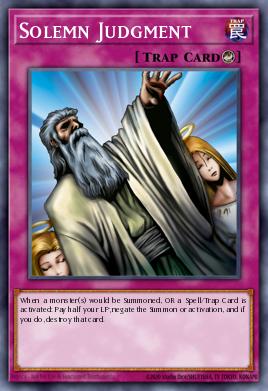
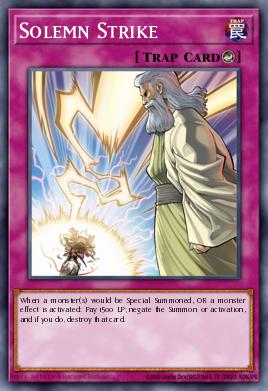
IN: Solemn Accusation, Judgment, Strike, or matchup-specific disruption.
Now the opponent must fight through:
your Memento interaction
plus
your Counter Trap
while your Graveyard remains prepared for the following turn.
21. Going Second Side-Deck Plan
Going second, reverse the philosophy.
You don’t need as many defensive cards that require you to establish a field first.
Bring in the tools that immediately attack the opponent’s established position.
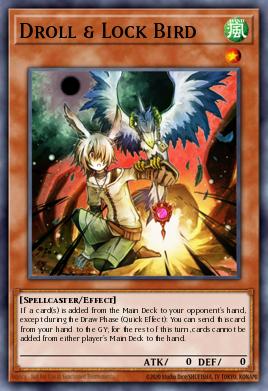
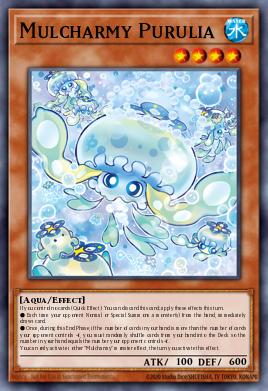
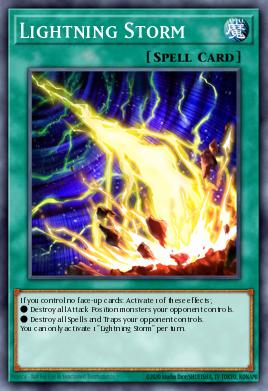
Depending on the matchup, that means increasing access to:
Pot of Sloth
Lightning Storm
Mulcharmy effects
or
Droll & Lock Bird.
The important part is not oversiding.
Don’t remove eight Memento cards to add eight hate cards and then wonder why your opening hand can’t actually start the engine.
Your side cards create the opening.
The Memento engine still has to win the Duel.
22. Matchup Tactics
Against Combo Decks
Your objective is to identify the actual choke point rather than trading interaction with the first effect they activate.
Going second, make them commit enough resources that Super Polymerization, Droplet, or your other breakers generate maximum value.
Going first, Creation King becomes significantly stronger when you allow the opponent to place multiple valuable cards on the field before using its destruction.
Patience beats panic.
Against Fusion Decks
Super Polymerization becomes one of your most threatening cards.
Continuously check:
Attributes
Types
and
how many Fusion Monsters they’ve committed.
Your opponent may unknowingly build your Fusion Monster for you.
Against these decks, don’t destroy potential Super Poly material unnecessarily.
Against Backrow Decks
Your monster-removal package becomes less dominant.
This is where Lightning Storm and appropriate siding become more important.
Avoid committing your entire engine before forcing important backrow.
If they have several unknown cards, make them reveal interaction incrementally.
Memento’s recovery makes trading one-for-one much less frightening than losing the entire engine to one well-timed blowout.
Against Graveyard Hate
This is one of the situations where you need to change your normal mentality.
Memento loves its GY, so effects that banish your resources or prevent Graveyard access can be devastating.
Prioritize removing those effects before committing Tatsunootoshigo, Goblin, Creation King, or Fusion resources that rely on the GY.
Don’t enthusiastically fill a Graveyard that your opponent has already made inaccessible.
Kill the lock first.
Then combo.
23. The Most Important Tactical Questions
Before every major Memento decision, mentally ask:
Before searching:
What part of my engine am I actually missing?
Before sending from Deck:
Which card is more valuable in my GY than remaining in my Deck?
Before destroying my monster:
Has this monster already performed its job, and what do I gain from destroying it?
Before Fusion Summoning:
Am I solving a problem, developing resources, or simply summoning because I can?
Before using Creation King:
Is this actually the opponent’s choke point?
Before Super Polymerization:
Will waiting allow me to consume something more valuable?
Before extending:
Does another summon materially improve my board?
Before ending Main Phase:
Do I already have lethal?
Those questions matter more than memorizing a twenty-action combo.
24. The Memento Mori Mindset
The deck becomes much easier once you stop thinking of your cards as belonging to individual zones.
A Memento monster can be:
searched from Deck
→ summoned
→ use its effect
→ destroyed
→ become a Graveyard resource
→ be revived
→ become Fusion Material
→ return to the Graveyard
→ contribute to another turn.
That’s why destroying your own cards isn’t inherently disadvantageous.
You’re moving resources through the engine.
And that’s why Memento Mori becomes increasingly dangerous when the Duel turns into a prolonged resource battle.
Your opponent sees a monster being destroyed.
You see it moving to where you need it next.
Remember that you must die.
For this deck, that’s where the fun starts.
Main Deck (40 Card Deck)






Extra Deck



Side Deck



Deck Breakdown
Archetype and card type distribution for this list.
Other Decks on YGOPRODeck
More Non-Meta Decks deck lists from the community.
 Cool
0
Cool
0
 Funny
0
Funny
0
 Angry
0
Angry
0
 Sad
0
Sad
0
Comments
Test Hand
Opening Hand
Delete Deck
Master Duel Cost Breakdown
Export Deck
Export to Image
Export to List
Export to Tabletop Simulator
Export Deck to Master Duel/Neuron
You can export your deck directly from YGOPRODeck to Yu-Gi-Oh! Master Duel or Neuron using our Web Browser extension!
Simply install the extension, and click the button below to export your deck to Master Duel or Neuron! It will bring you to the Official Konami Database. Once there, you can edit a deck and hit the "Import clipboard and save" button!
Price Deck from
| Card | Qty | Price ea | Total | Card Set |
|---|
Download Deck images
This will download all images used in this deck and zip them up for you. This is done on your computer and could take a minute or so to complete so please do not close the page.