Elderwood Warden is built around the idea of an ancient Druid whose forest is not merely territory to protect—it is his weapon. Rather than relying on one enormous combo, the deck establishes a living defensive network of plants, spirits, beasts, and Synchro guardians that react as the opponent pushes deeper into the field.
The deck combines the recursive, reactive nature of the Naturia engine with the flexibility and modern Synchro power of Elfnote. Your goal is to establish several different layers of interaction and force the opponent to fight through them one at a time. Instead of creating a board consisting entirely of generic negates, Elderwood Warden constantly adapts, replacing fallen monsters, Synchro Summoning during either turn, disrupting the opponent’s hand and field, and turning seemingly harmless monsters into significantly larger threats.
Core Strategy
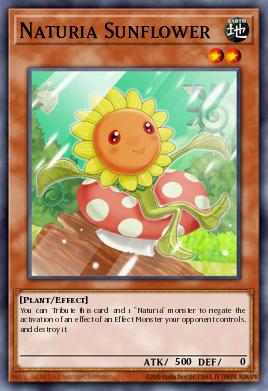
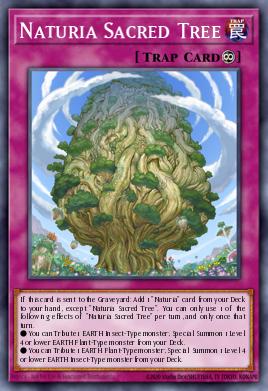
The Naturia engine represents the forest itself.
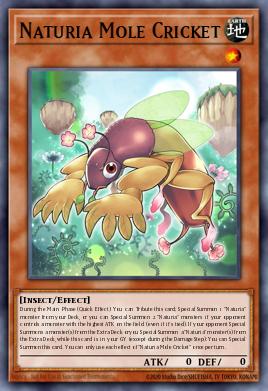
Naturia Camellia is one of your most important setup pieces because it sends Naturia resources directly from the Deck to the Graveyard while also allowing the forest to regenerate when the opponent begins summoning monsters. Naturia Mole Cricket gives you another way to access your Naturia monsters and becomes especially dangerous once your opponent commits multiple monsters to the board.
A common goal is to establish Camellia while placing Mole Cricket or another useful Naturia monster into circulation. Once your opponent starts developing their field, your Naturia monsters begin replacing one another rather than simply disappearing when removed.
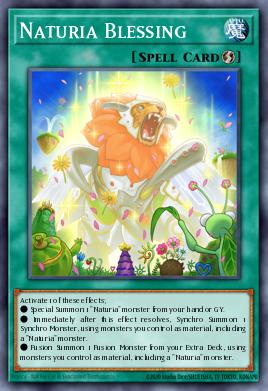
Naturia Blessing makes this even more dangerous. It can recover a Naturia from the Graveyard, extend your field, or turn your Naturia monsters into a Synchro Summon. This means an apparently modest Naturia board can suddenly transform into a major Extra Deck threat after the opponent has already committed resources.
The Elfnote engine acts as the Druids inhabiting and commanding the forest. Rather than simply creating raw monster count, the Elfnote monsters give you several different forms of interaction and access to a wide range of Synchro Levels. This allows the deck to react according to what the opponent is actually doing instead of following the same predetermined combo every duel.
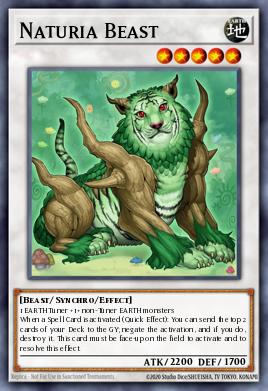
Naturia Beast — The Guardian at the Gate
Naturia Beast is one of the deck’s most oppressive defensive tools against Spell-heavy strategies.
Once established, Naturia Beast can repeatedly negate Spell activations by milling cards from your Deck. Because its Spell negation is not limited to a simple once-per-turn activation, certain opponents may be forced to remove Beast before they can properly begin playing.
This is particularly devastating against decks that depend upon multiple starter, search, Fusion, Ritual, or board-breaking Spells.
When your hand allows it, establishing Naturia Beast alongside Elfnote interaction is significantly stronger than relying upon Beast alone. The opponent may have an answer for Beast, but forcing that answer through another layer of disruption can completely change the exchange.
Do not summon Beast automatically simply because you can. Against a monster-heavy opponent, another Synchro may provide substantially more value. Elderwood Warden rewards identifying what kind of invasion the forest is facing and summoning the appropriate guardian.
The Elfnote Defensive Network
Your Elfnote monsters provide the adaptable portion of your board.
Lucina, Tinia, Fortuna, Regina, and Power Patron allow the deck to develop additional bodies, recover resources, manipulate Levels, and create interaction during the opponent’s turn.
Power Patron is particularly important because changing Levels and Synchro Summoning reactively allows you to transform your existing field into whatever tool is necessary.
For example, instead of immediately converting every monster into your strongest possible Synchro during your own turn, leaving appropriate material available can threaten an opponent-turn Synchro.
That uncertainty creates pressure by itself.
The opponent must consider whether committing another monster will allow you to summon a new guardian, whether destroying one of your monsters actually helps your Graveyard setup, and whether extending farther into the board risks running directly into another interruption.
Elfnote Seraphim Strelitzia
Strelitzia is one of the deck’s natural centerpieces.
It provides a powerful Plant Synchro body while also extending the Elfnote engine and manipulating monster Levels. Rather than merely being something you summon at the end of a combo, Strelitzia helps keep the engine moving and creates additional Synchro possibilities.
Whenever possible, think of Strelitzia as a staging ground rather than the final destination.
A field containing Strelitzia plus additional Elfnote or Naturia resources can become several different things depending on what the opponent does next.
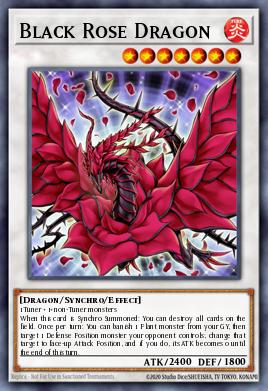
Black Rose Dragon — Reclaim the Battlefield
Black Rose Dragon is your emergency reset.
If the opponent successfully creates a field that is becoming too difficult to dismantle piece by piece, Black Rose allows you to simply burn everything down.
This is especially useful because Elderwood Warden can often rebuild from the Graveyard better than many opponents can rebuild from zero.
The important tactical decision is knowing when the board has become worth sacrificing.
Do not summon Black Rose simply because the opponent controls several cards. If you already have control of the duel, destroying your own established resources may help them more than it helps you.
Black Rose becomes strongest when the opponent has invested substantially more into the battlefield than you have.
Imagine your opponent has committed several Extra Deck monsters, backrow cards, and engine pieces while you retain Graveyard resources and follow-up.
At that point:
Synchro Summon Black Rose Dragon.
The entire battlefield disappears.
Then the forest begins growing again.
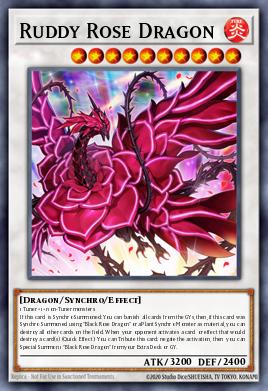
Ruddy Rose Dragon — Purification
Ruddy Rose Dragon performs a different role.
Certain decks are difficult to defeat simply by destroying their monsters because their Graveyard has effectively become a second hand. Those are the situations where Ruddy Rose becomes extremely valuable.
By eliminating Graveyard resources, Ruddy Rose can completely disrupt strategies relying on recursion, revival, graveyard-triggered effects, or long-term resource loops.
If Black Rose represents the Druid burning away an invading army, Ruddy Rose represents cleansing the land afterward so nothing corrupted remains beneath the soil.
Be careful, however, because your deck also uses the Graveyard heavily. Timing Ruddy Rose correctly is critical. Ideally, you activate it after gaining value from your own Graveyard while denying the opponent a much larger pool of resources.
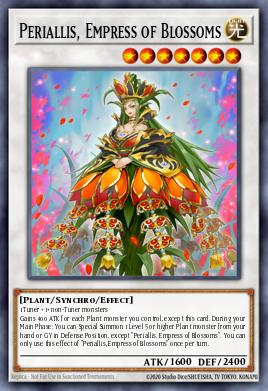
Periallis and the Plant Engine
Periallis provides another way to maintain your Plant-based resource loop rather than simply climbing into generic Synchro monsters every time.
Its ability to support your larger Plant monsters makes it useful when you want to maintain pressure without exhausting your entire field.
This is especially helpful during grind games.
Against opponents capable of surviving your initial defenses, your goal changes from “stop everything” to “make every exchange cost them more than it costs me.”
That is where Naturia recursion, Elfnote recovery, and Plant revival begin working together.
Going First
Going first, resist the temptation to convert your entire hand into one enormous board.
You generally want multiple independent defensive layers.
An ideal opening may include:
- a Naturia-based defensive threat;
- Elfnote interaction;
- a Synchro monster appropriate for the matchup;
- remaining material or effects capable of producing another Synchro during the opponent’s turn;
- hand disruption held in reserve.
The opponent should never be able to remove one monster and suddenly discover that your entire board has collapsed.
For example, establishing Naturia Beast while retaining Elfnote interaction is substantially more oppressive than spending every resource merely making Beast.
If the opponent uses removal on Beast, you still have another response.
If they attempt to bait your Elfnote interaction first, Beast continues shutting down their Spells.
If they refuse to commit enough resources, you preserve your own cards and begin the following turn with the stronger position.
The deck rewards patience.
Going Second
Going second, Elderwood Warden becomes less about building the forest and more about reclaiming it.
Your hand traps should be used to attack the opponent’s most important structural points rather than simply negating the first legal effect you see.
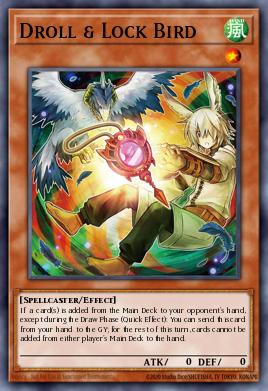
Against decks that repeatedly search, Droll can be devastating if activated after allowing the initial search to resolve.
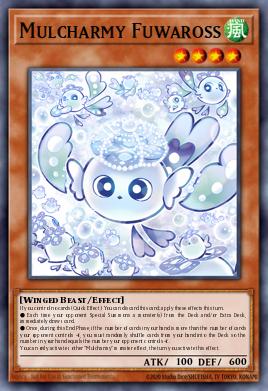
Against Special Summon-heavy decks, Fuwalos can force the opponent to either stop early or give you enough cards to dismantle their eventual field.
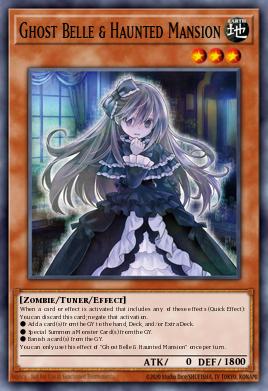
Ghost Belle becomes particularly valuable against strategies relying upon the Graveyard.
After slowing the opponent, use the Elfnote engine to establish Synchro access while your Naturia cards begin creating recurring resources.
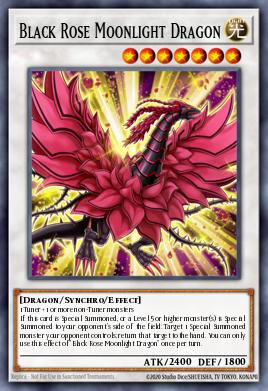
If their board is already overwhelming, Black Rose becomes your equalizer.
If their Graveyard is the real problem, consider climbing toward Ruddy Rose instead.
The objective is not always to destroy everything.
It is to identify where the opponent’s power actually resides and attack that resource.
Example Defensive Sequence
Suppose you establish Naturia resources and an Elfnote monster while keeping additional interaction available.
Your opponent begins Special Summoning.
Their summon can trigger your Naturia engine and allow you to recover or develop another Naturia monster.
They activate a Spell to extend their combo.
If Naturia Beast is established, Beast can negate it.
They then attempt to remove Beast with a monster effect.
Your Elfnote interaction can answer that monster.
They continue extending and place enough monsters onto the board that your existing field is threatened.
At that point, your remaining monsters may become Synchro material during their turn, producing another guardian.
What initially looked like two or three small monsters has now forced the opponent through several completely different forms of interaction.
That is the deck’s defining gameplay pattern.
The Grind Game
Do not underestimate this deck once the initial boards have been broken.
Naturia monsters repeatedly moving between the Deck, field, and Graveyard combined with Elfnote recursion means Elderwood Warden is extremely comfortable playing several turns.
You should therefore avoid wasting resources merely to increase damage unless you are certain you can end the duel.
If your opponent has two cards remaining while you have Naturia and Elfnote resources circulating between your field and Graveyard, you are probably already winning.
Keep forcing exchanges.
Eventually the opponent runs out of invaders.
The forest does not.
Side Deck Philosophy
The Side Deck allows Elderwood Warden to change how aggressively it protects the field.
Against combo decks, bring in additional cards that punish excessive Special Summoning or interrupt important engine pieces.
Against established boards, prioritize powerful board breakers.
Against heavy backrow strategies, increase your Spell/Trap removal.
The key is not over-siding.
Your Naturia and Elfnote engines need enough remaining pieces to function properly. Replacing too much of the engine with reactive cards can leave you with a hand capable of stopping the opponent but incapable of establishing your own board afterward.
Usually, remove the least useful interaction for that particular matchup rather than dismantling the core engine.
Final Philosophy
Elderwood Warden should not feel like piloting a machine.
It should feel like controlling territory.
Every monster represents another part of the ecosystem.
Every Graveyard resource is something waiting beneath the soil.
Every Synchro monster is another guardian awakened because the opponent ventured too far into the forest.
Some opponents will encounter Naturia Beast and find their magic useless.
Some will overwhelm your first line of defense only for another Synchro guardian to emerge.
Others will finally establish an enormous battlefield—
only for Black Rose Dragon to reduce everything to ashes.
And when the smoke clears, your opponent discovers the fundamental problem with fighting a Druid in his own forest:
You can destroy the trees.
The roots are still there.

 120
120 120
120 300
300 1020
1020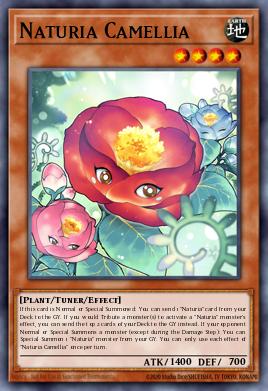













 Cool
0
Cool
0
 Funny
0
Funny
0
 Angry
0
Angry
0
 Sad
0
Sad
0