Chimera Forest Guardian — Deck Description
This Chimera build is designed around short, efficient Fusion lines and reactive disruption rather than long combo sequences. The deck plays like a pack of mythical beasts guarding an ancient forest: establish one or two dangerous creatures, load the Graveyard with useful effects, then punish the opponent whenever they try to break through.
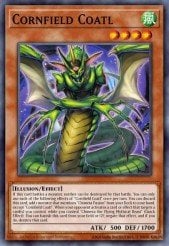
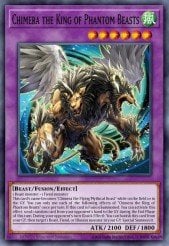
The core objective is to reach Chimera the King of Phantom Beasts while placing cards such as Mirror Swordknight and Cornfield Coatl into the Graveyard. Once established, the deck can threaten monster-effect negation, protection from targeting effects, hand disruption, monster theft, and Fusion Summons using the opponent’s own monsters.
Basic Opening Strategy
One of the cleanest openings starts with Cornfield Coatl.
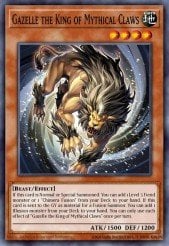
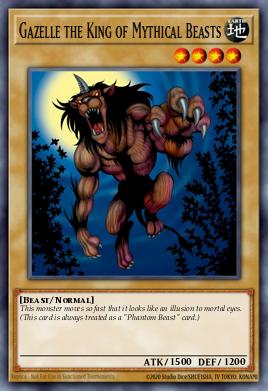
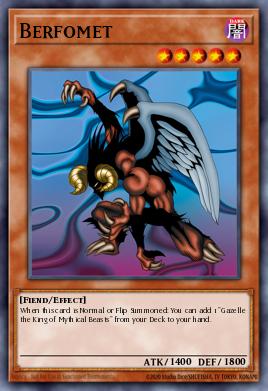
Discard Coatl to search Mirror Swordknight, then Normal Summon Swordknight and Tribute it to summon Big-Winged Berfomet from the Deck. Berfomet gives you access to Gazelle the King of Mythical Claws and Chimera Fusion.
From there, Fusion Summon Chimera the King of Phantom Beasts using Gazelle and Berfomet.
This accomplishes several things from one short sequence:
- Chimera becomes your primary field presence.
- Gazelle replaces itself by searching another Illusion monster.
- Berfomet can revive an Illusion from the Graveyard.
- Mirror Swordknight is now available as Graveyard disruption.
- Cornfield Coatl is also sitting in the Graveyard waiting to protect your field.
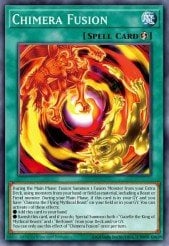
- Chimera Fusion can later recycle itself for another Fusion Summon.
You therefore get several layers of interaction without spending an entire turn performing unnecessary Extra Deck summons.
Playing During the Opponent’s Turn
This is where the deck is strongest.
When Chimera the King of Phantom Beasts is established, Mirror Swordknight becomes a monster-effect negate from the Graveyard. Save it for an effect that actually threatens your position rather than using it on the first effect your opponent activates.
Cornfield Coatl provides another defensive layer. If the opponent activates an effect that targets one of your cards, Coatl can answer it from the Graveyard. This makes your apparently small opening board considerably harder to dismantle than it initially appears.
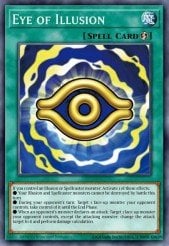
Eye of Illusion gives the deck another unusual form of disruption by temporarily taking control of an opponent’s monster. The best target is often not simply their strongest monster. Taking an important combo piece before they can use it as Synchro, Xyz, Link, or Fusion material can completely derail their turn.
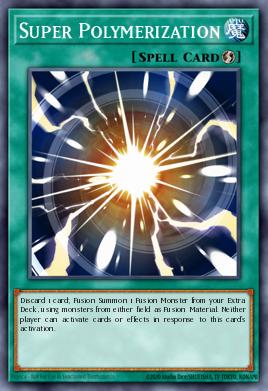
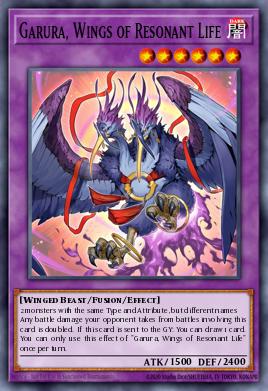
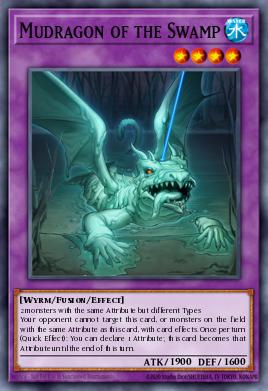
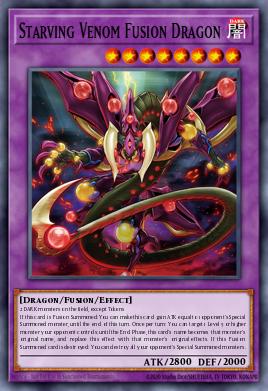
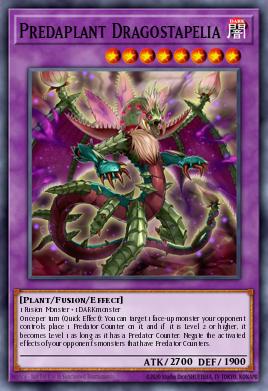
Super Polymerization should similarly be treated as an ambush rather than something you need to activate immediately. Allow the opponent to commit compatible monsters first, then turn their field into Garura, Mudragon, Starving Venom, Dragostapelia, or another appropriate Fusion Monster. Because the opponent cannot respond normally to Super Polymerization, it is one of the deck’s best ways of breaking dangerous boards.
Nightmare Apprentice and the Illusion Toolbox
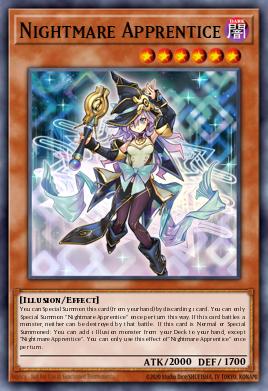
Nightmare Apprentice provides both extension and consistency. Because it can Special Summon itself while placing another card into the Graveyard, it helps establish your Illusion engine without consuming your Normal Summon.
Its search effect lets you choose the Illusion monster appropriate for the situation rather than following one mandatory combo.
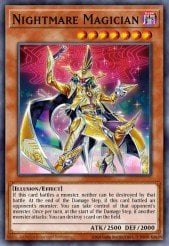
Master Tao provides additional recursion, while Nightmare Magician gives the deck another threatening Illusion body. Nightmare Hands can place the Illusion monster you want directly into the Graveyard and later convert itself into additional field presence by taking a monster from the opponent’s Graveyard.
This makes the Graveyard function almost like a second hand.
Chimera Fusion Is the Engine, Not Just Polymerization
Do not think of Chimera Fusion as a disposable Fusion Spell.
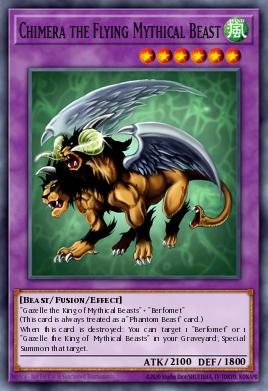
Once Chimera the Flying Mythical Beast—or a monster treated as it—is available, Chimera Fusion begins recycling itself and generating additional resources.
The original Gazelle the King of Mythical Beasts and Berfomet are included specifically because Chimera Fusion can bring them directly into play through its Graveyard effect. They are not intended to be your primary Normal Summons.
This creates a recurring cycle:
Fusion Summon → establish Chimera → use your Graveyard disruption → recover Chimera Fusion → generate more beasts → Fusion Summon again.
The longer a duel continues, the more difficult it becomes for a casual opponent to exhaust your resources.
Going for the Kill
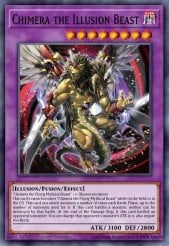
Once the opponent’s board has been weakened, Chimera the Illusion Beast becomes one of your primary finishers.
Rather than simply being another negate, it is designed to dominate combat. Its high ATK, repeated attacks against monsters, and ability to reduce battled monsters to 0 ATK while negating their effects allow it to tear through established fields.
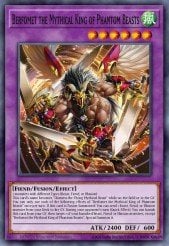
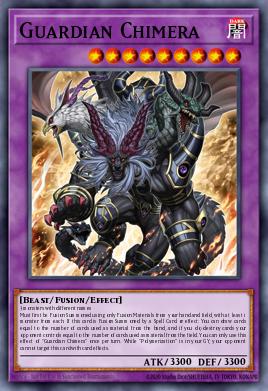
Guardian Chimera is your other major offensive payoff. It converts Fusion materials into immediate card advantage while simultaneously removing opposing cards. It is particularly effective once your engine has generated excess monsters and cards in hand that can be converted into meaningful advantage.
Against DARK-heavy fields, Starving Venom or Dragostapelia may provide the cleaner route. Against matching Attributes and Types, Garura and Mudragon allow Super Polymerization to turn seemingly safe opposing boards into your own resources.
How to Pilot the Deck Well
The biggest mistake is trying to use every available effect immediately.
This deck rewards patience.
If Mirror Swordknight is your only monster negate, do not waste it on an inconsequential search effect when the opponent may have a much stronger monster effect later.
If you have Super Polymerization, sometimes allowing the opponent to summon another monster makes your eventual activation dramatically more powerful.
If Eye of Illusion can steal an important Extra Deck material, wait until the opponent has committed enough resources that losing that monster actually hurts.
And if you already control enough interaction to survive the turn, there is no reason to overextend additional monsters into a potential board wipe.
The deck wins by making every monster matter, not by summoning as many monsters as possible.
Overall Playstyle
Chimera Forest Guardian is a midrange Fusion deck with an emphasis on mythical Beasts and Illusions. Its turns are considerably shorter than dedicated combo strategies, but the deck still has numerous meaningful decisions.
Your first turn generally establishes the forest.
Your opponent’s turn is where the traps start closing.
Then your following turn releases the larger Chimera monsters to finish whatever survived.
It rewards knowing when to interrupt, what monster to steal, when to use Super Polymerization, and which Fusion Monster best answers the current board rather than memorizing a fifteen-step combo.
The result is a deck that feels powerful without becoming solitaire: summon your guardian, prepare your Graveyard, pass the turn, and make the opponent regret entering your territory.

 60
60 150
150 600
600 840
840









 Cool
0
Cool
0
 Funny
0
Funny
0
 Angry
0
Angry
0
 Sad
0
Sad
0